

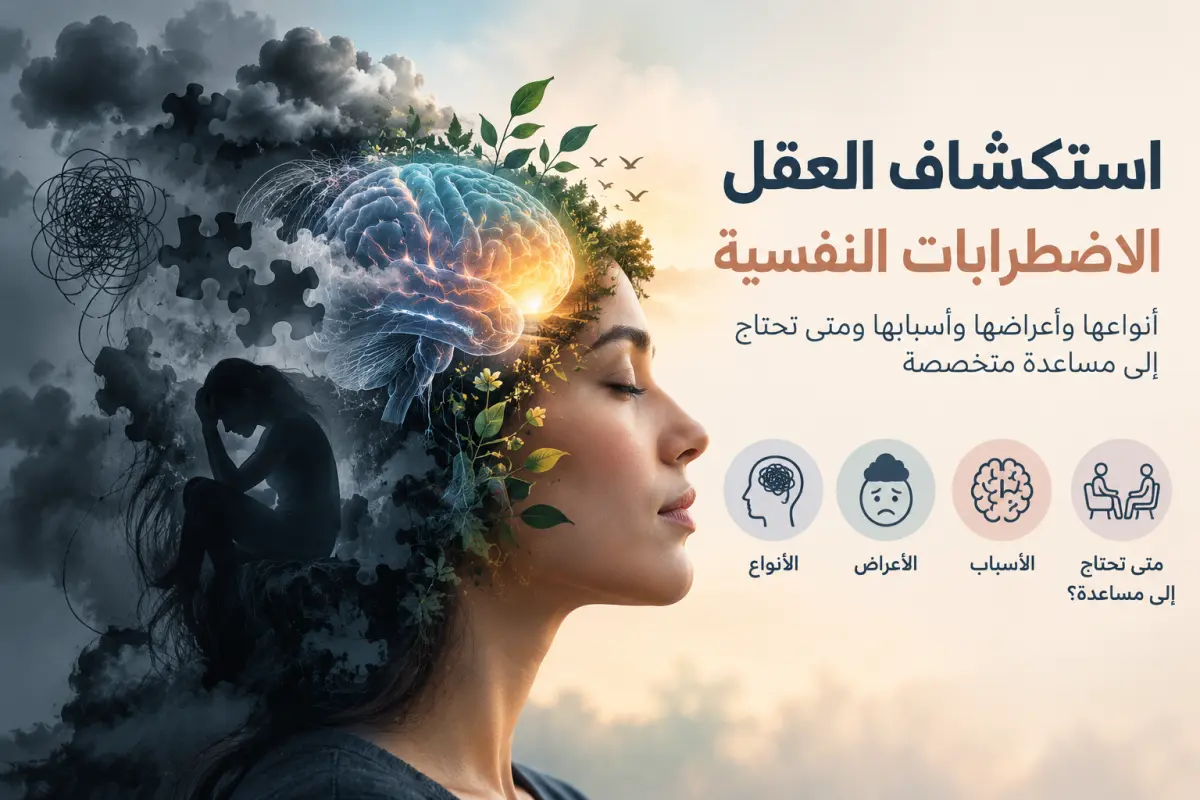
Mental Disorders: Types, Symptoms, Causes, and When to Seek Professional Help
Mental disorders can affect thoughts, emotions, behavior, relationships, work, education, and everyday functioning.
They do not represent one single condition. Mental health disorders include a wide range of conditions with different symptoms, levels of severity, and treatment needs.
Experiencing stress, sadness, fear, or anxiety does not automatically mean that a person has a mental disorder.
Diagnosis requires professional assessment that considers the type of symptoms, their duration and severity, and how strongly they affect everyday life.
What Are Mental Disorders?
Mental disorders are conditions that may affect one or more areas of functioning, including:
-
Thoughts.
-
Emotions and mood.
-
Behavior.
-
Sleep.
-
Concentration.
-
Social relationships.
-
Work and education.
-
Everyday activities.
Some difficulties may be temporary, while others require longer-term treatment and follow-up.
Common Types of Mental Disorders
Anxiety Disorders
Anxiety disorders can involve excessive or persistent fear and worry that begins to interfere with daily functioning.
Possible symptoms include:
-
Excessive worrying.
-
Fear about the future.
-
Difficulty relaxing.
-
Physical tension.
-
Sleep difficulties.
-
Avoidance.
-
Repeatedly seeking reassurance.
You can explore additional information about anxiety through the Psychological Articles section.
Phobias
A phobia involves intense and persistent fear of a specific object or situation.
Examples may include:
-
Flying.
-
Heights.
-
Enclosed spaces.
-
Animals.
-
Needles.
-
Blood.
The person may recognize that the fear is stronger than the actual risk but still find it difficult to control.
Panic Disorder
Panic disorder involves recurrent panic attacks.
A panic attack is a sudden surge of intense fear or discomfort that may include:
-
Rapid heartbeat.
-
Sweating.
-
Trembling.
-
Dizziness.
-
Difficulty breathing.
-
Fear of losing control.
A panic attack and generalized anxiety are not exactly the same, although both are related to anxiety.
Depressive Disorders
Depression can affect mood, energy, motivation, concentration, sleep, appetite, and the ability to enjoy everyday activities.
Normal sadness after a difficult experience does not automatically mean someone has depression.
Professional assessment becomes important when symptoms are persistent, severe, or significantly interfere with everyday functioning.
Psychotic Disorders and Psychosis
Psychosis refers to symptoms that affect a person's perception and interpretation of reality.
These may include:
-
Hallucinations.
-
Delusions.
-
Disorganized thinking.
-
Significant behavioral changes.
Psychosis is not always a single diagnosis. Psychotic symptoms can occur in different psychiatric and medical conditions.
Schizophrenia
Schizophrenia is a complex mental health disorder that can affect thinking, perception, emotions, communication, and behavior.
Symptoms may include:
-
Hallucinations.
-
Delusions.
-
Disorganized thinking.
-
Reduced motivation.
-
Social withdrawal.
-
Cognitive difficulties.
Schizophrenia is not the same as having multiple personalities.
Personality Disorders
Personality disorders involve persistent patterns of thinking, feeling, and relating to others that can cause significant difficulties.
It is important not to diagnose someone with a personality disorder based on one behavior or personality trait.
For example, having some narcissistic traits does not automatically mean that someone has narcissistic personality disorder.
What Causes Mental Disorders?
There is no single explanation for all mental health conditions.
Different disorders may involve combinations of factors such as:
-
Genetics.
-
Biological factors.
-
Brain development and functioning.
-
Life experiences.
-
Trauma.
-
Chronic stress.
-
Family and social environments.
-
Physical health conditions.
The relative importance of these factors varies considerably between conditions and individuals.
Mental disorders should therefore not be reduced to ideas such as “weakness,” “lack of willpower,” or one single experience.
What Are Common Symptoms of Mental Disorders?
Symptoms vary considerably depending on the condition.
Changes in Thinking
These may include:
-
Excessive worrying.
-
Difficulty concentrating.
-
Persistent negative thoughts.
-
Difficulty making decisions.
-
Unusual beliefs or perceptions in some conditions.
Emotional Changes
Examples include:
-
Persistent sadness.
-
Intense fear.
-
Anxiety.
-
Irritability.
-
Mood changes.
-
Loss of interest or enjoyment.
Behavioral Changes
These may include:
-
Social withdrawal.
-
Avoidance.
-
Reduced performance at work or school.
-
Difficulty completing daily responsibilities.
-
Significant changes in everyday routines.
Physical Symptoms
Mental health difficulties may sometimes be associated with:
-
Sleep problems.
-
Appetite changes.
-
Fatigue.
-
Muscle tension.
-
Rapid heartbeat.
-
Stress-related stomach symptoms.
Physical symptoms can also have medical causes, so they should not automatically be assumed to have a psychological origin.
Can I Diagnose Myself Online?
No.
Online information can help people understand mental health topics, but symptom lists and online questionnaires cannot provide a complete diagnosis.
Many symptoms occur in several different mental health conditions.
Some also occur in people who do not have a mental disorder.
Medical conditions, medications, and substances can also produce symptoms that resemble psychological problems.
A diagnosis therefore requires an individual professional evaluation.
When Do Psychological Symptoms Become a Problem?
Four useful factors to consider are:
Duration: How long have the symptoms continued?
Severity: How intense are they?
Frequency: How often do they occur?
Impact: Are they affecting relationships, sleep, education, work, or everyday activities?
The greater the impact on functioning, the more important it becomes to seek appropriate assessment and support.
How Are Mental Disorders Treated?
Treatment varies depending on the specific condition, severity, and individual needs.
It may include:
Psychotherapy
Different evidence-based psychological therapies may be used depending on the person's needs and diagnosis.
Medication
Some mental health conditions may require medication prescribed and monitored by a psychiatrist or another qualified medical doctor.
Psychologists do not prescribe psychiatric medication.
Family and Social Support
Supportive relationships and family involvement can sometimes form an important part of treatment and recovery.
Healthy Lifestyle Support
Sleep, physical activity, and healthy routines can support mental well-being.
However, lifestyle changes should not be treated as a substitute for professional care when a clinical condition requires treatment.
What Is the Difference Between a Psychologist and a Psychiatrist?
A psychologist provides psychological assessment, counseling, and psychotherapy within their professional scope.
A psychiatrist is a medical doctor specializing in mental health who can provide medical assessment and prescribe medication when required.
Some conditions benefit from coordinated care between psychological and medical professionals.
You can explore available support through Psychological and Behavioral Disorders.
When Should I Seek Professional Help?
Professional support may be appropriate when:
-
Symptoms continue for an extended period.
-
Emotions become difficult to manage.
-
Sleep or concentration is significantly affected.
-
Work or education begins to suffer.
-
Relationships are affected.
-
Avoidance increasingly limits everyday life.
-
There are major changes in thinking or behavior.
-
Symptoms cause persistent distress.
Urgent medical help should be sought when there is an immediate risk of harm to the person or others, suicidal thoughts or intentions, severe loss of contact with reality, or an inability to meet basic needs.
Psychological Support in Amman, Jordan
Accurate mental health information is useful, but educational articles cannot replace individual assessment.
Psychologist Suha Abu Ghoush provides psychological counseling and support for individuals and families in Amman, Jordan, according to each person's circumstances and needs.
Some cases may also require referral to or collaboration with psychiatrists and other medical professionals.
You can learn more about Psychologist Suha Abu Ghoush, explore available Psychological Treatments, or visit the Psychological Articles section.
Conclusion
Mental disorders are diverse and do not affect everyone in the same way.
They can influence thoughts, emotions, behavior, relationships, and everyday functioning, but accurate diagnosis requires professional assessment rather than simply comparing symptoms with information found online.
Understanding symptoms, reducing stigma, and seeking appropriate support can help people make more informed decisions about their mental health.
Trusted Sources
Disclaimer: This article is for psychological education and awareness only. It is not intended for diagnosis and is not a substitute for individual psychological or medical assessment by a qualified professional.