Marital Problems and Marriage Counseling in Amman, Jordan
Marital problems are common in relationships, and disagreement does not necessarily mean that a marriage is unsuccessful. However, when conflicts become repetitive, communication begins to decline, or trust and emotional wellbeing are affected, it may be helpful to understand what is happening within the relationship and develop healthier ways of responding.
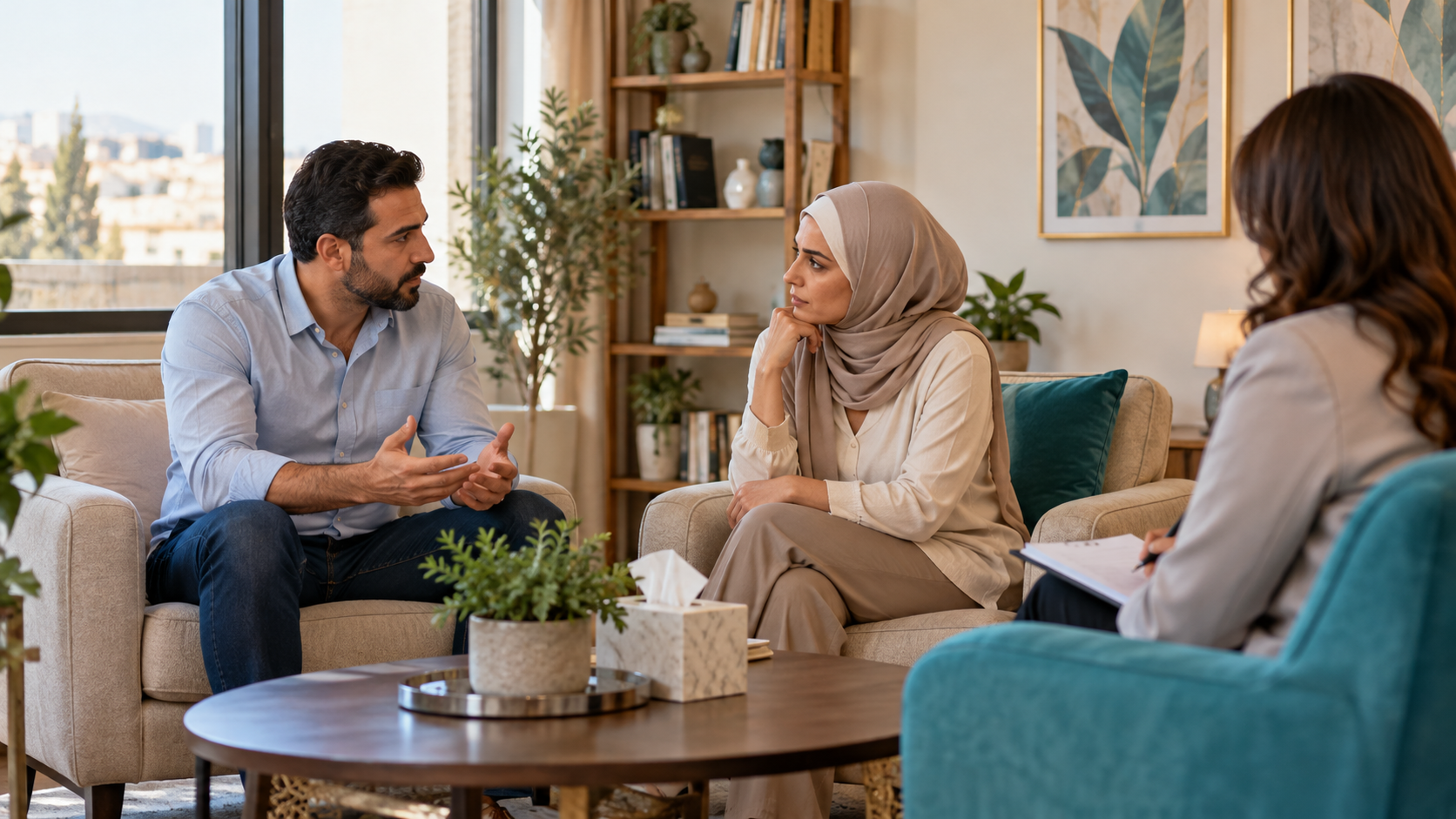
Psychologist Suha Abu Ghoush provides marriage and family counseling in Amman, Jordan, supporting couples who want to better understand relationship challenges, communication patterns, and recurring disagreements.
What Causes Marital Problems?
Relationship difficulties rarely result from a single cause. Several emotional, social, financial, and personal factors may interact.
Poor Communication
Communication plays an important role in maintaining a healthy relationship. Problems may develop when partners have difficulty expressing their emotions and needs or when conversations become dominated by criticism, defensiveness, or avoidance.
The American Psychological Association highlights open communication and regular meaningful conversations as important components of healthy relationships.
Loss of Trust
Trust can be affected by previous experiences, repeated misunderstandings, or ongoing feelings of insecurity. When trust decreases, even relatively small situations may trigger conflict.
Financial and Work-Related Stress
Financial responsibilities, work demands, and everyday pressures can influence emotional wellbeing and the way couples communicate.
Relationship stress may sometimes occur alongside anxiety, tension, or excessive thinking. Visitors can also explore Suha's article about anxiety and when it begins to affect everyday life.
Differences in Expectations
Partners may have different expectations regarding responsibilities, children, family relationships, lifestyle, or future plans.
Discussing expectations clearly can help couples understand these differences before they develop into repeated conflict.
For couples preparing for marriage, premarital counseling may provide an opportunity to discuss expectations, communication, and future responsibilities.
Jealousy and Insecurity
Occasional jealousy may occur in many relationships, but persistent jealousy or suspicion can affect trust and emotional security.
Different Conflict Styles
One partner may want to discuss a problem immediately, while the other may prefer some time before talking. Neither approach is automatically wrong, but failing to understand these differences can increase tension.
How Can Couples Deal With Marital Problems?
There is no single method that works for every relationship, but several communication strategies can help couples approach conflict more constructively.
Communicate Without Blame
Instead of beginning a conversation with accusations such as “You always…” or “You never…,” partners can try describing their feelings and needs directly.
For example:
“I feel that we have not had enough time to talk lately, and I would like us to make more time for that.”
This can make it easier to discuss the issue without immediately creating defensiveness.
Listen Before Responding
During conflict, people often focus on preparing their response rather than understanding what the other person is saying.
Active listening can help both partners better understand the concerns behind the disagreement.
Avoid Important Discussions During Intense Anger
When emotions are extremely high, constructive communication may become difficult.
Taking a short break and returning to the discussion when both partners are calmer may sometimes be more productive.
Identify the Underlying Problem
An argument may begin over a small event, while the underlying concern is related to feeling ignored, unsupported, overwhelmed, or disconnected.
Understanding the deeper concern may be more useful than focusing only on the most recent disagreement.
When Should Couples Consider Marriage Counseling?
Couples may consider professional counseling when:
-
The same conflicts continue without resolution.
-
Communication has become consistently difficult or tense.
-
Trust has been damaged.
-
One or both partners feel emotionally distant.
-
Relationship conflict is affecting everyday wellbeing.
-
Couples struggle to make important decisions together.
-
They want to improve communication before difficulties become more serious.
Research examining evidence-based interventions for couple relationship distress has found support for several therapeutic approaches, although outcomes vary according to the couple, treatment approach, and circumstances. A research review is available through PubMed.
A separate review of cognitive-behavioral couple therapies also discusses evidence supporting these approaches for relationship distress. The research can be viewed through PubMed.
How Can Marriage Counseling Help?
The purpose of counseling is not to determine which partner is right or wrong.
Instead, sessions may help couples understand how they interact with one another and identify patterns that contribute to repeated conflict.
Counseling may focus on:
-
Improving communication and listening skills.
-
Understanding recurring disagreements.
-
Expressing needs more clearly.
-
Managing emotions during conflict.
-
Developing healthier problem-solving strategies.
-
Rebuilding trust when appropriate.
-
Understanding how psychological stress influences the relationship.
Learn more about marriage and family counseling and the support available.
Marriage Counseling in Amman, Jordan
If you are looking for a psychologist in Jordan or marriage counseling in Amman, psychologist Suha Abu Ghoush provides psychological and family counseling based on the needs and circumstances of each case.
You can also learn more about psychologist Suha Abu Ghoush and her professional background.
Visitors can explore the website's psychological services for additional areas of support.
Marriage counseling does not provide one universal solution for every relationship. Instead, it can provide a structured environment for understanding problems, improving communication, and developing practical relationship skills.
Is Marriage Counseling Only for Couples in Crisis?
No.
Some couples seek counseling because they are experiencing repeated conflict, while others want to strengthen communication or prepare for an important new stage in their relationship.
Marriage counseling can therefore be used not only during serious relationship difficulties but also as a way to better understand the relationship and develop healthier communication skills.
Trusted Sources
Disclaimer: This content is intended for psychological education and awareness. It is not an individual diagnosis and does not replace assessment by a qualified professional.


 01