Mai ziyadah street, Amman, Jordan
+962790464797
Psy.Suha Abougoush
Improving Communication Between Spouses in Amman, Jordan – Psychologist Suha Abu Ghoush
Healthy communication plays an important role in building a supportive and respectful marriage. It helps partners express their emotions, discuss expectations, understand differences, and manage everyday challenges together.
However, many couples experience communication difficulties in marriage, even when both partners want to maintain a positive relationship. One partner may feel ignored or misunderstood, while the other may find conversations stressful or believe that every discussion turns into an argument.
Over time, these patterns may contribute to emotional distance, frustration, and unresolved disagreements.
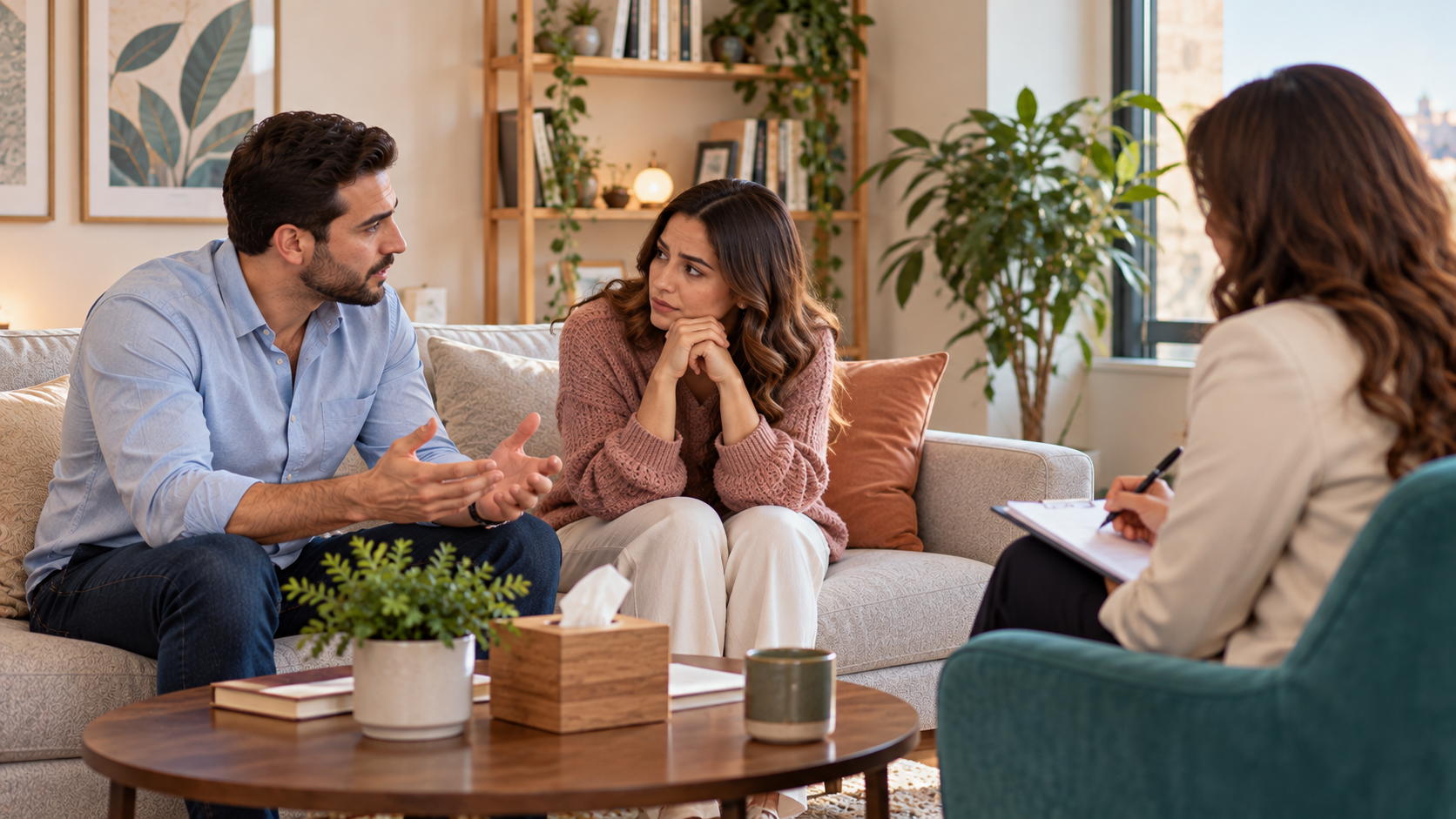
If you are looking for marriage communication counseling in Amman, Jordan, psychological and marital counseling may help you understand communication challenges and explore more constructive ways to express feelings and needs.
Psychologist Suha Abu Ghoush provides psychological, marital, and family counseling services in Amman, supporting individuals and couples who wish to develop healthier communication patterns.
Why Is Communication Important in Marriage?
Effective communication involves more than discussing daily responsibilities. It includes sharing personal feelings, understanding emotional needs, setting boundaries, and working through disagreements respectfully.
Healthy communication may help couples:
Express emotions and concerns clearly.
Understand each other's perspectives.
Reduce unnecessary misunderstandings.
Discuss expectations and responsibilities.
Manage disagreements more constructively.
Strengthen trust and emotional connection.
Make important decisions together.
Feel heard and respected.
Good communication does not mean agreeing on every issue. Instead, it involves creating opportunities for both partners to express themselves safely and respectfully.
For additional information, explore Marital Relations Counseling.
Common Causes of Poor Communication Between Spouses
1. Difficulty Expressing Emotional Needs
Some individuals struggle to describe their feelings directly. They may assume their partner should automatically recognize what they need.
When expectations are not communicated, frustration and disappointment may develop.
2. Daily Responsibilities and Stress
Work schedules, financial responsibilities, parenting, and household tasks may leave couples with limited time for meaningful conversations.
As a result, discussions may focus primarily on practical matters rather than emotional connection.
3. Criticism and Blame
Statements involving accusations or generalizations can create defensiveness and make constructive conversations more difficult.
For example, telling a partner that they never listen may lead to conflict rather than understanding.
4. Lack of Active Listening
When someone listens primarily to prepare a response, they may overlook the emotions and concerns being expressed.
Active listening involves paying attention, asking questions, and checking whether the message has been understood correctly.
5. Unresolved Previous Conflicts
Past disagreements may influence how partners interpret new situations.
An ordinary conversation may become emotionally difficult when it reminds one partner of a previous unresolved issue.
6. Different Communication Styles
Some people prefer discussing problems immediately, while others need time to process their emotions.
Understanding these differences can help couples negotiate how and when to communicate.
Signs That Marriage Communication May Need Improvement
Communication difficulties may appear through several patterns:
Important conversations regularly become arguments.
One or both partners avoid discussing concerns.
Emotional needs are frequently misunderstood.
Conversations involve repeated criticism or defensiveness.
One partner withdraws without returning to the discussion.
Minor disagreements escalate quickly.
Emotional closeness decreases.
Partners feel unheard or disconnected.
These patterns do not automatically indicate a psychological disorder. However, they may show that the relationship would benefit from greater attention to communication.
Practical Ways to Improve Communication Between Spouses
Set Aside Time for Meaningful Conversations
Creating regular opportunities to talk without distractions may help partners stay emotionally connected.
Even short conversations can be valuable when both individuals have time to express themselves.
Practice Active Listening
Active listening involves giving the speaker attention and checking that their message has been understood.
For example, asking, "Do you mean that you felt unsupported when this happened?" can help clarify emotional concerns.
Use Statements That Express Personal Feelings
Instead of focusing on blame, partners can describe how specific situations affect them.
For example:
Rather than saying, "You never care about me," a partner might say, "I feel disconnected when we don't spend time talking together."
This approach may reduce defensiveness and encourage discussion.
Avoid Difficult Conversations During Intense Anger
Strong emotional reactions can make listening and problem-solving more difficult.
Couples may agree to take a short break and return to the conversation at a specific time when they feel calmer.
Express Appreciation
Acknowledging everyday efforts and positive actions can help partners feel valued.
Appreciation should be genuine and should not replace discussing serious relationship concerns.
Clarify Expectations
Couples may benefit from discussing responsibilities, personal boundaries, quality time, financial decisions, and family involvement.
Clear expectations can help prevent misunderstandings.
Consider Professional Marriage Counseling
When communication challenges continue despite personal efforts, professional counseling may provide structured guidance.
You can learn more through Marital and Family Counseling.
How Can Marriage Counseling Improve Communication?
Counseling provides an opportunity to explore emotional experiences and communication patterns within a supportive professional setting.
Depending on the couple's circumstances, sessions may involve:
Identifying communication patterns: Understanding how discussions begin, how each person reacts, and why conversations sometimes escalate.
Recognizing emotional needs: Exploring feelings that may be difficult to express directly.
Practicing listening skills: Learning to listen with curiosity rather than preparing an immediate defense.
Managing disagreements: Developing methods for discussing difficult topics respectfully.
Building practical agreements: Establishing realistic approaches to shared responsibilities, boundaries, and communication routines.
Reviewing progress: Identifying which changes have been useful and what requires further attention.
Counseling approaches and outcomes vary. The number of sessions and specific results cannot be guaranteed in advance.
How Does Communication Affect Mental Health?
Persistent relationship tension may contribute to emotional stress, anxiety, loneliness, and difficulty concentrating.
Likewise, psychological stress can influence the way people respond to disagreements.
The World Health Organization explains that stress can affect emotional well-being, sleep, and concentration.
Improving emotional awareness and coping strategies may therefore form part of a broader approach to relationship communication.
When Should Couples Seek Counseling?
Couples may consider professional guidance when:
Conversations regularly end in conflict.
One partner feels unable to express concerns.
Misunderstandings occur repeatedly.
Emotional distance increases.
Communication problems affect parenting or family life.
Attempts to change communication patterns have not helped.
Professional support may also be useful before these difficulties become more severe.
Safety consideration: If a relationship involves threats, violence, intimidation, or coercive control, individual safety assessment and specialized support are priorities. Joint couples counseling may not be appropriate.
Marriage Communication Counseling With Suha Abu Ghoush in Amman
Psychologist Suha Abu Ghoush offers psychological, marital, and family counseling in Amman, Jordan.
Counseling may help individuals and couples explore communication difficulties, emotional concerns, recurring misunderstandings, and the effects of stress on their relationship.
The process focuses on understanding each person's circumstances and identifying practical goals. Recommendations depend on the needs and professional assessment of each case.
Frequently Asked Questions
Can poor communication in marriage be improved?
Communication skills can be developed through awareness, practice, and appropriate guidance. However, progress depends on the circumstances and participation of those involved.
Can one spouse attend counseling alone?
Yes. Individual counseling may help someone understand their emotions, communication habits, and available options. Joint sessions depend on suitability, consent, and safety.
How many marriage counseling sessions are needed?
There is no fixed number. Counseling plans vary according to the nature of the difficulties, goals, and progress.
Trusted Educational Resources
Book Marriage Counseling in Amman, Jordan
If communication difficulties are affecting your relationship or emotional well-being, you can contact Psychologist Suha Abu Ghoush to learn more about marital and family counseling services.
Contact: +962 79 046 4797
Many people go through problems, crises, and sometimes mental illnesses, and they get confused when thinking about seeking psychological treatment. Should they go to a psychiatrist or a psychologist?Both are trained in dealing with the mind and providing psychological care to patients, but each differs in the approach to treatment and the types of psychological problems they specialize in treating
Here we will explain the main similarities and differences between a psychiatrist and a psychologist and answer this question. First: The Main Differences Between a Psychiatrist and a Psychologist 1. Type of Education The nature of education differs between a psychiatrist and a psychologist, but both require obtaining a masters degree. Psychiatrists studied medicine for 7 years then specialized in psychiatry and received training for at least four years in hospitals and rehabilitation centers on diagnosis and approved therapeutic methods. As for psychologists, they studied in the Faculty of Education or the Faculty of Arts in the Department of Psychology for 4 years, then received practical training in psychiatric hospitals for at least one year to obtain a professional license. 2. Psychological Problems Each Specializes In Treating Psychiatrists specialize in critical mental conditions and mental illnesses such as schizophrenia, depression, obsessive-compulsive disorder, attention deficit disorder, and other mental illnesses that require treatment. Whereas psychologists specialize in moderate or mild cases such as behavioral modification, sleep disorders, tension in emotional relationships, and other behavioral problems. 3. Prescribing Medication Prescribing medication is the responsibility of psychiatrists alone because they work on both the psychological and biological levels at the same time, understanding the bodys nature and genetic history. They studied anatomy and the bodys response to medications in medical school in addition to their knowledge of the side effects of drugs. Whereas psychologists are not allowed to prescribe or administer medication because they do not have sufficient knowledge of its biological effects and side effects. 4. Diagnosis and Treatment Methods Psychiatrists provide comprehensive care for the patient as they focus on family and social support for the patient and their upbringing since childhood. They may also request some types of tests and psychological measures to help with diagnosis. In cases where the patient suffers from an organic problem causing the psychological problem, the psychiatrist may resort to drug intervention alongside psychological and behavioral therapy. Whereas psychologists rely on understanding the patients upbringing and its effect on their behavior. They offer some psychological tests and measures to help diagnose cases and rely on modifying the patients misconceptions and improving their mental state away from medication and medical examinations. 5. Practice The ideal form of providing psychological service and care is that the first line is the psychiatrist, as they study the case and determine whether it is mild, moderate, or critical, then refer it to a psychologist. If the cases are mild or moderate, they only require psychological treatment without drug intervention. There are some critical cases where after the psychiatrist finishes the drug treatment, they may refer the cases to the psychologist to continue with psychological rehabilitation. Second: What are the Similarities Between a Psychiatrist and a Psychologist? After presenting the main differences between a psychiatrist and a psychologist, we will present the similarities between them: 1. Both are trained to understand the nature of the mind, thinking, and behaviors. 2. Both have the ability to provide counseling and psychological support. 3. Both improve and develop the patients thinking and behaviors. Should I See a Psychiatrist or a Psychologist? After presenting the main differences and similarities between a psychiatrist and a psychologist, we will answer the question most patients ask about which type of therapist to seek help from: ● You should see a psychiatrist if: 1. The condition is critical or when suffering from certain mental illnesses such as depression, schizophrenia, or obsessive-compulsive disorder, and other illnesses that require a specialist to request the necessary tests and scans and prescribe the appropriate medication. 2. The medical condition has persisted for a long time or has recurred after treatment. 3. Psychological rehabilitation alone is not effective, and medication intervention is needed. 4. You are considering harming yourself or suicide. 5. Your treating doctor recommends seeing a specialist psychiatrist. ● You will need to see a psychologist if: 1. You are experiencing anxiety, depression, psychological pressures, or other difficulties affecting mental health. 2. You feel that life is difficult and need psychological support to cope with it. 3. You need to assess your mental health if you feel it is not okay. 4. You are experiencing many marital problems and need help dealing with them. 5. Your child is experiencing behavioral and coping problems and needs behavior modification. 6. You have experienced an emotional shock or a painful loss and need support to overcome it in a healthy way.
© Psychologist Suha Abu Goush - Built & Powered By SmartZone All Rights Reserved