

Panic Disorder: Symptoms, Panic Attacks, Causes, Treatment, and Coping Strategies
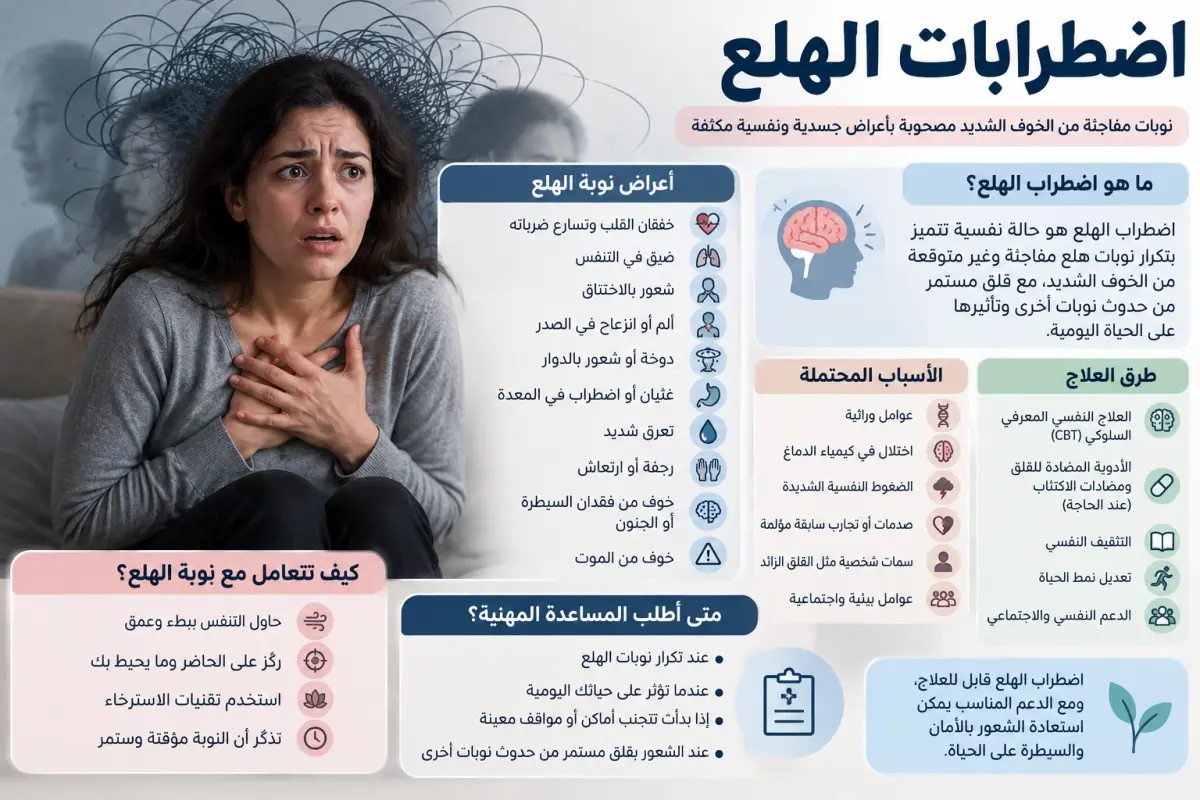
Panic disorder is an anxiety disorder characterized by recurrent panic attacks involving sudden, intense fear and physical symptoms such as a rapid heartbeat, shortness of breath, dizziness, sweating, trembling, or a feeling of losing control.
A panic attack may occur without an obvious external danger, which can make the experience extremely frightening.
However, experiencing one panic attack does not automatically mean that someone has panic disorder.
What Is a Panic Attack?
A panic attack is a sudden surge of intense fear or discomfort that generally reaches a peak within a relatively short period.
It may occur during a frightening situation, but panic attacks can also appear unexpectedly.
During the attack, the physical sensations may feel so strong that a person believes something dangerous is happening.
What Are the Symptoms of a Panic Attack?
Possible symptoms include:
-
Rapid heartbeat or palpitations.
-
Sweating.
-
Trembling.
-
Shortness of breath.
-
A feeling of choking.
-
Chest pain or discomfort.
-
Nausea or stomach discomfort.
-
Dizziness or light-headedness.
-
Hot or cold sensations.
-
Numbness or tingling.
-
Feeling detached from yourself or reality.
-
Fear of losing control.
-
Fear of dying or that something terrible is happening.
Symptoms and severity can vary from one person to another.
Are Panic Attacks Dangerous?
Panic attacks themselves can feel extremely frightening, but they do not necessarily mean that a physical emergency is occurring.
However, symptoms such as chest pain, shortness of breath, dizziness, and rapid heartbeat can also occur in medical conditions.
New, severe, unusual, or concerning symptoms should therefore receive appropriate medical assessment rather than automatically being attributed to anxiety.
What Is the Difference Between a Panic Attack and Panic Disorder?
A person may experience an isolated panic attack without developing panic disorder.
Panic disorder becomes more likely when panic attacks recur and the person begins to:
-
Worry persistently about having another attack.
-
Avoid situations because an attack might occur.
-
Change everyday activities because of fear.
-
Constantly monitor physical sensations.
For example, someone may begin avoiding:
-
Driving.
-
Shopping centers.
-
Public transportation.
-
Crowded places.
-
Travel.
-
Going outside alone.
-
Exercise because an increased heart rate feels frightening.
The problem can therefore become not only the attack itself, but also the fear of the next attack.
What Causes Panic Disorder?
There is no single explanation that applies to every person.
Several factors may contribute, including:
-
A tendency toward anxiety.
-
Ongoing psychological stress.
-
Difficult life experiences.
-
Heightened sensitivity to physical sensations.
-
Catastrophic interpretation of normal bodily changes.
-
Biological or genetic factors in some individuals.
For some people, the first attack appears during a period of high stress. Others cannot identify an obvious trigger.
Anxiety and Panic Attacks
Panic disorder belongs to the group of anxiety disorders, but persistent anxiety and panic attacks are not identical.
Anxiety may involve:
-
Excessive worrying.
-
Fear about the future.
-
Ongoing tension.
-
Difficulty relaxing.
-
Repetitive negative thoughts.
A panic attack usually involves a much more rapid and intense increase in fear accompanied by strong physical sensations.
You can explore anxiety and related topics in the Psychological Articles section.
Phobias and Panic Attacks
A person with a phobia may experience intense panic-like symptoms when exposed to a feared object or situation.
However, phobias and panic attacks are different.
A phobia is generally connected to a specific fear, such as flying, heights, animals, or enclosed spaces.
Panic attacks can sometimes occur unexpectedly without a clearly identifiable trigger.
More information about anxiety and phobias is available in the Psychological Articles section.
Why Does Fear Continue After the Attack Ends?
After experiencing a frightening panic attack, a person may begin monitoring the body constantly.
For example:
“My heart is beating faster. Is another attack starting?”
“I feel dizzy. Am I losing control?”
“What if this happens while I'm outside?”
This can create a cycle:
Physical sensation → frightening interpretation → increased anxiety → stronger physical symptoms → greater fear.
Over time, the person may become afraid of the physical sensations of anxiety themselves.
Does Avoidance Help?
Avoidance can provide temporary relief.
For example, if a panic attack occurred in a shopping center, someone may decide not to return.
Their anxiety decreases, which can make avoidance feel like the reason they stayed safe.
Over time, however, this can lead to avoiding more and more situations.
Treatment therefore focuses not only on reducing panic attacks but also on addressing the fear and avoidance that develop around them.
What Can I Do During a Panic Attack?
If panic attacks have already been appropriately assessed and you recognize the symptoms, several strategies may help.
Remind Yourself That the Attack Is Temporary
You may tell yourself:
“This is a panic attack. It is frightening, but it will pass.”
Slow Your Breathing
Try to avoid rapid, exaggerated breathing.
Gradually slowing the breath and focusing on a calm exhalation may help reduce hyperventilation.
Focus on the Present Environment
Notice what you can:
-
See.
-
Hear.
-
Touch.
This may reduce the amount of attention being directed toward internal physical sensations.
Avoid Constantly Checking Symptoms
Repeatedly checking your pulse or breathing can sometimes increase attention to physical sensations and maintain fear.
How Is Panic Disorder Treated?
Several evidence-based approaches may be used depending on the individual.
Cognitive Behavioral Therapy
Cognitive Behavioral Therapy (CBT) is commonly used for panic disorder.
It may help a person:
-
Understand how panic attacks develop.
-
Identify thoughts that increase fear.
-
Reconsider catastrophic interpretations of physical sensations.
-
Reduce avoidance.
-
Develop more balanced responses to anxiety.
Gradual Exposure
Structured exposure may be used to help someone safely approach situations or sensations they have started avoiding.
This should be planned appropriately rather than forcing someone into overwhelming situations without preparation.
Medication
Medication may be appropriate for some people.
Psychiatric medication should be assessed, prescribed, and monitored by a psychiatrist or other qualified medical doctor.
When Should I Seek Psychological Support?
Professional support may be useful if:
-
Panic attacks are recurring.
-
You are constantly afraid of the next attack.
-
You have started avoiding important places or activities.
-
Work or education is affected.
-
Relationships or social activities are suffering.
-
Driving, travelling, or going out has become difficult.
-
You constantly monitor your physical sensations.
-
Your daily life increasingly revolves around preventing another attack.
You can learn more about available support through the Psychological Treatments section.
Psychological Support for Panic Attacks in Amman, Jordan
Psychological counseling may help people understand the cycle of panic, fear, and avoidance and develop appropriate ways of responding to anxiety and physical sensations.
You can learn more about the qualifications and professional experience of Psychologist Suha Abu Ghoush or browse additional Psychological Articles.
Conclusion
Panic attacks can feel intense and frightening, but understanding what happens during an attack can reduce some of the fear surrounding the experience.
Treatment focuses not only on managing individual attacks but also on reducing fear of future attacks and the avoidance that can develop around them.
When panic attacks recur or begin to interfere with everyday life, professional assessment and psychological support may help identify the problem and develop an appropriate treatment plan.
Trusted Sources
Disclaimer: This article is intended for psychological education and awareness only. It is not a medical or psychological diagnosis. New, severe, or unusual physical symptoms should receive appropriate medical assessment.